
Paul Vengeons on X
@VengeonsP
【the 27,800-click AI SEO engine (full system)】
68% OF US GOOGLE SEARCHES NOW END WITHOUT A CLICK. everyone's still fighting for #1 --> the clicks went to whoever ChatGPT names
These 5 moves are how you become that name:
I'm giving every single one away for free ✅
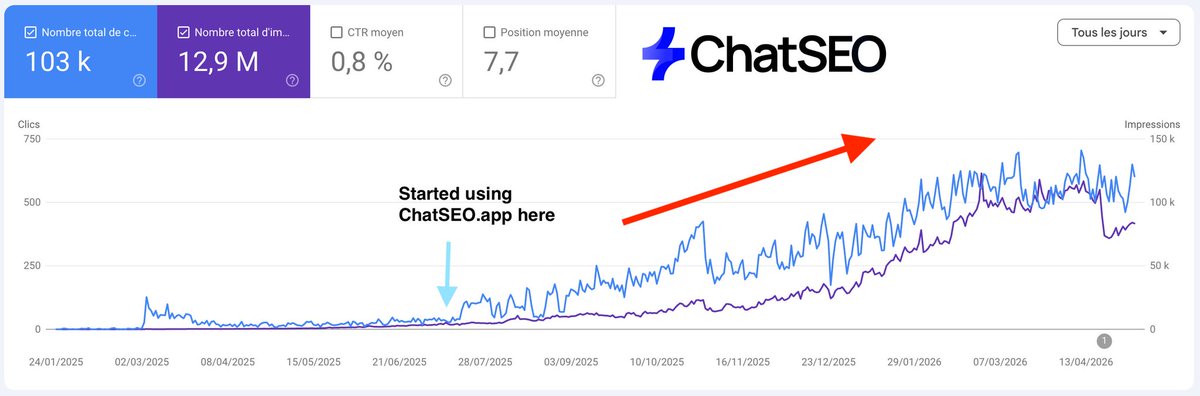
To get similar results for your business: try ChatSEO free for 7 days
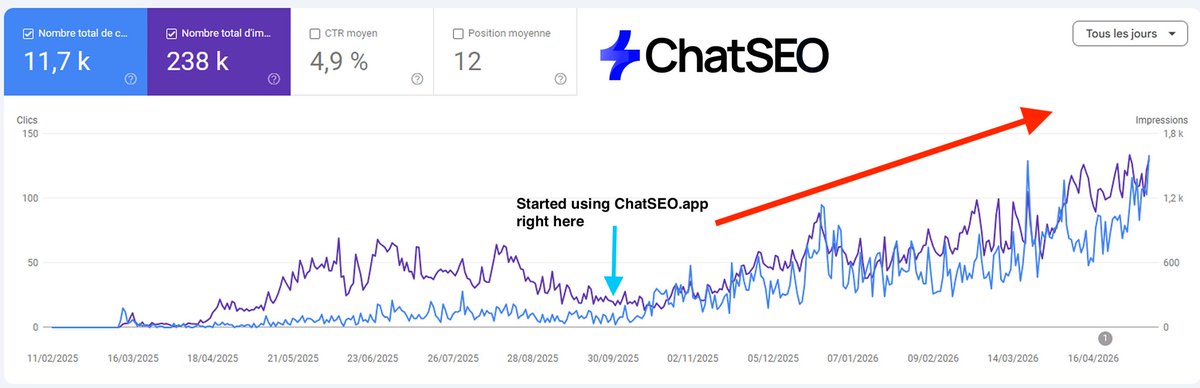
This week I watched Julian Goldie break down the system behind one of his sites. Nearly 28,000 clicks in 90 days, still climbing
He runs a handful of small sites. Nobody wrote a single article on them by hand, and he says he has never even logged into that one
Across those sites there are close to 1,500 AI-written posts, and the traffic grew the whole way through
He calls it the everywhere engine. Here is how it works, in order, and what I would steal from it
Little tip: bookmark this. You'll come back to it
Before we start: the click didn't vanish, it moved
For 20 years SEO had one job: be the best answer on Google. Everyone did it so well that Google ended up with clean answers to almost everything. So it stopped needing to send you anywhere
That's what AI Overviews are: Google reading the internet's homework back to people before they click. The numbers quoted in the video:
• BrightEdge: AI Overviews show up on about 48% of the searches it tracks, up 58% in one year, and around 80% in education
• SparkToro and Similarweb: 68% of US Google searches ended with zero clicks in the first 4 months of 2026, against about 60% in 2024
• Ahrefs: when an AI Overview shows up, the click rate of the #1 spot drops by about 58%
That's the bad half. The other half: a study of 53 brands across millions of queries found that brands NAMED inside the AI answer earn about 35% more clicks than the result right below them with no mention
The old question was "how do I rank #1?". The new one is "how do I become the name the AI trusts enough to repeat?"
-> Whoever gets named gets the clicks. Whoever doesn't gets skipped
1. Run a flywheel, not a blog
One site publishing one post and hoping is the old model. Julian runs a few small sites together
One keyword goes in, plus one real example from his own work. The AI writes several different posts from it: different titles, different angles, different examples. They go out across the sites the same day
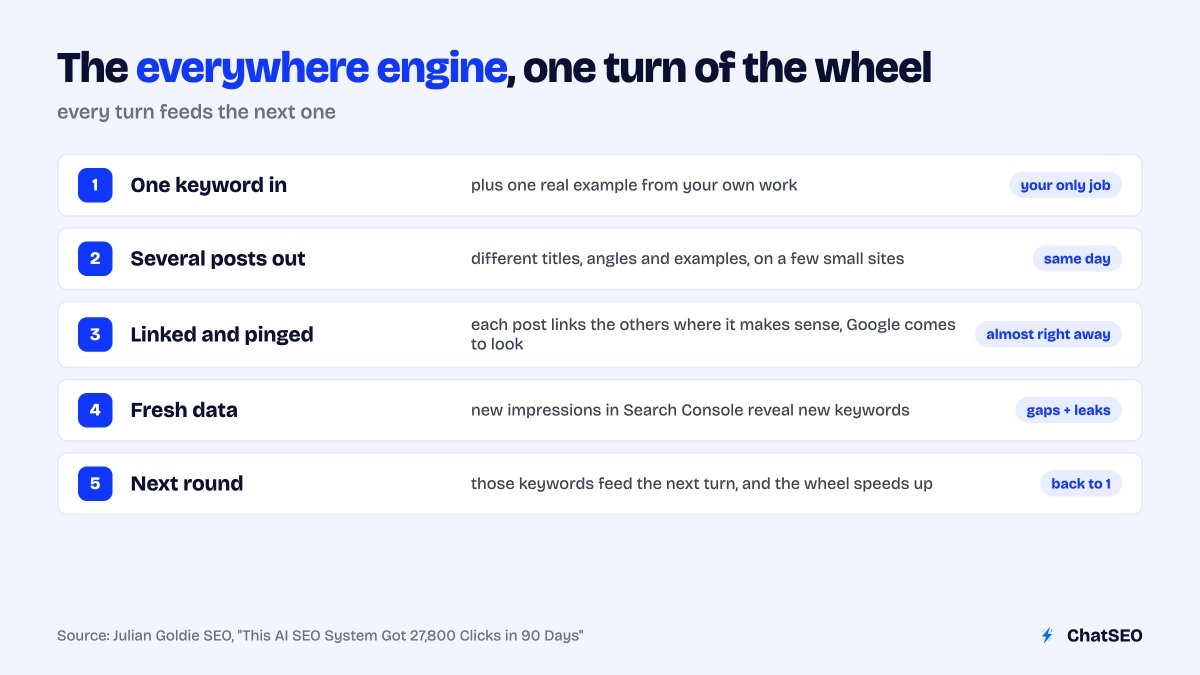
Each post links to the others where it makes sense, and the sites get pinged so Google comes to look almost right away
Every new post creates fresh data. That data reveals new keywords. Those keywords feed the next round
He is clear that this is what works for him, not a recommendation. A flywheel is heavy to start, then every push adds up until it spins on its own
-> The unit of work is not "an article". It's one keyword plus one true story, turned into several pages
2. Your best keyword tool is free, and it's yours
The fuel is your own Google Search Console. It shows every query you already appear for, data no other keyword tool can see
And since June 2026 it has an AI performance report, so Google itself tells you how visible you are inside AI answers. Almost nobody opens it
Two things to hunt in there:
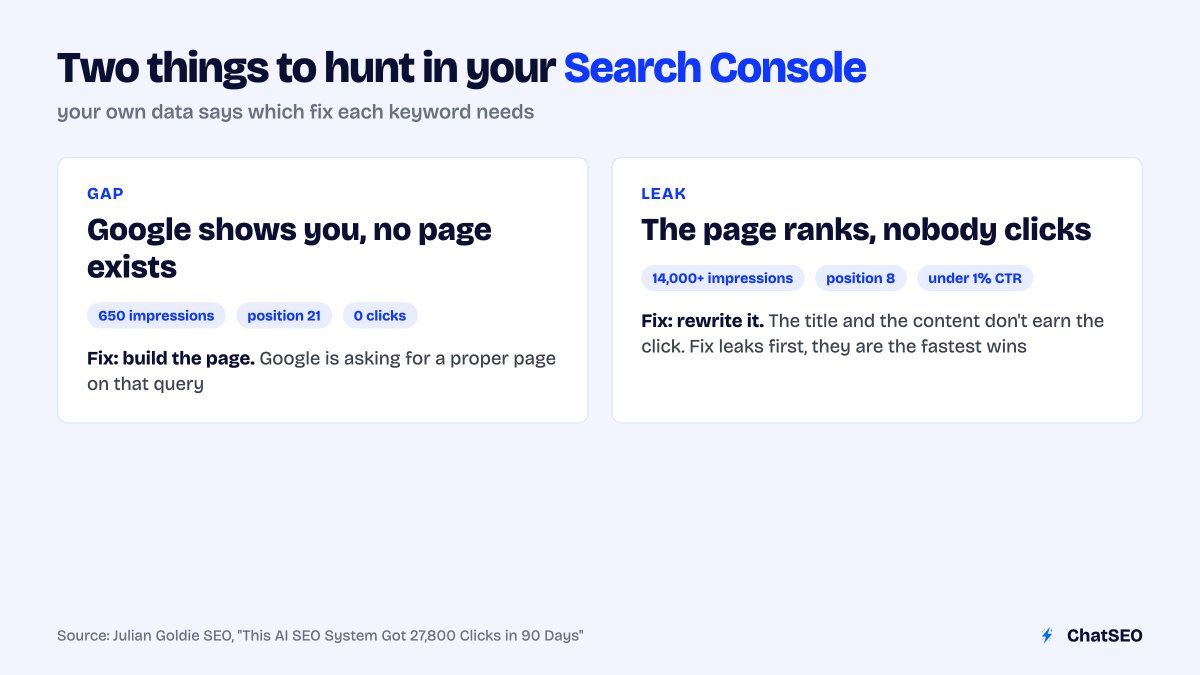
• Gaps. One of his sites showed up for a keyword with 650 impressions, position 21, zero clicks, and no real page for it. Google is basically asking for a page, so you build it
• Leaks. Another keyword had over 14,000 impressions at position 8, and under 1% of people clicked. The page ranks fine, the title and content just don't earn the click. You rewrite that page instead of building a new one
Your data tells you which situation you're in. No guessing, and that's how the engine finds its next target every day
The prompt I would run on a Search Console export, adapt it to your site:
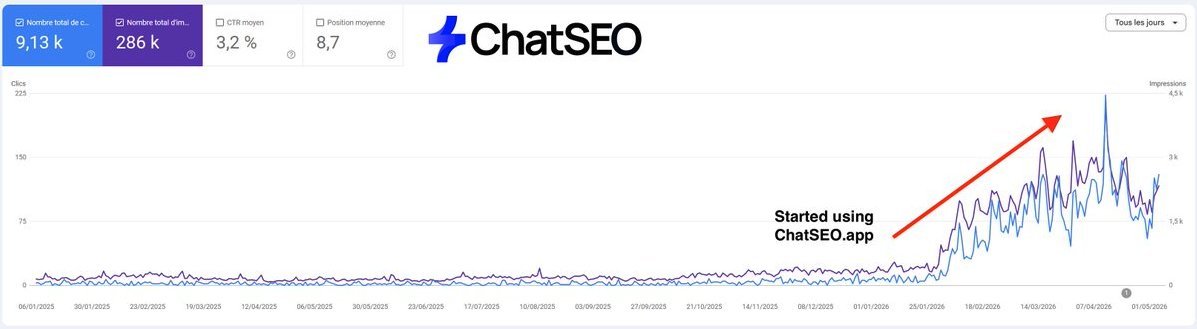
To get similar results for your business: try ChatSEO free for 7 days
3. Write the rules down before the AI writes a word
Google isn't against AI content. It's against bad AI content
What keeps you on the right side is a written set of rules the AI follows every single time. Julian's runs about 13 steps. The ones he shared:
• every fact has to come from something that actually happened
• a real example near the top of every post
• titles written to earn the click
• a clear next step at the end
The magic ingredient is your own experience: real tests, real results, good and bad. That's information gain, adding something to the internet that wasn't there before. Nobody can copy it, because it only happened to you
-> If you can describe your own work, you can feed this engine. That's the whole skill requirement
4. What others say about you beats what you say about yourself
This is the one that flips how you think about your own site
A study of 82 factors behind whether ChatGPT recommends a brand found relevance at #1. Expected. But #2, above your own site's authority, was brand mentions across the rest of the web
You can't edit a Reddit thread. You can't rewrite someone else's review. You can only become the brand that gets mentioned in the right places
So the engine reaches past the sites. His team built a subreddit and posts there too: over 244,000 views in the last 30 days
Not all of that is search. But when AI engines crawl the web and keep seeing the same brand next to the same topics, on the sites, on Reddit, on social, they learn the connection. Then they recommend you inside the answers
-> Stop measuring only your own domain. Count where your name shows up next to your topic
5. The clicks you keep are worth more
Everyone panics about losing clicks. Almost nobody looks at the quality of the ones left
• Adobe, over a trillion visits: visitors from AI answers were about 42% more likely to take action, and spent 48% more time on the page
• One study of a few hundred companies: visitors from AI took the next step about 5 times more often than visitors from regular Google search
Why: the AI already did the comparing. It filters out the casual browsers, so whoever lands is already half decided
-> Fewer visitors, each one worth far more. Look past the traffic number
To get similar results for your business: try ChatSEO free for 7 days
The flat stretch where most people quit
The part of the video I liked most is the boring one
New sites sit flat for months while Google learns to trust them. One of his crawled from 81 clicks a week to 405, but only after a long flat stretch
That stretch is where most people quit. They wrote the posts by hand, saw nothing for weeks, and stopped
His sites have no dashboard and no plugins for him to touch. Publishing and indexing go through an API, and his only job is a keyword and a real example
-> When the system runs in the background instead of you, the flat weeks stop mattering
What this does not prove
The industry numbers (BrightEdge, Ahrefs, Adobe and the rest) are quoted in the video. I did not re-check each study, so read them as directions, not decimals
27,800 clicks is one site. The video does not show its niche, its competition or how much of the traffic converts
A network of small sites that link to each other is the part I would be most careful with. It works for him, he says it is not a recommendation, and so do I
And the video sells a course and a strategy call. The method stands on its own, but keep that in mind
What I would do this week
• Write down 3 to 5 real results from your own work: a test, a before and after, a client you helped
• Open Search Console and check the new AI performance report
• Hunt the gaps, then fix the leaks first
• Set a rhythm: one keyword a day
• Post where your people actually hang out, not only on your own site
The full video, by Julian Goldie: This AI SEO System Got 27,800 Clicks in 90 Days
Thanks for reading!
🎁 If you want to hire your first AI SEO employee (for free), click here
This is a saved copy. The original post may have changed or been removed.